Recurring slow drains
When drains keep slowing down from buildup rather than a one-off clog, a full cleaning resets the line.

Hydro jetting clears a sewer line with high-pressure water that scours the pipe walls, cutting through grease, sludge, scale, and roots that a basic snake only pokes a hole in. It is a thorough cleaning, not a repair, so it works best once a camera has confirmed the pipe can take it.
Hydro jetting is the difference between opening a path through a clog and actually cleaning the pipe. It restores a line to close to full diameter, but it is a cleaning tool, not a structural fix, and it is only safe on pipe that is in good enough shape to handle the pressure.
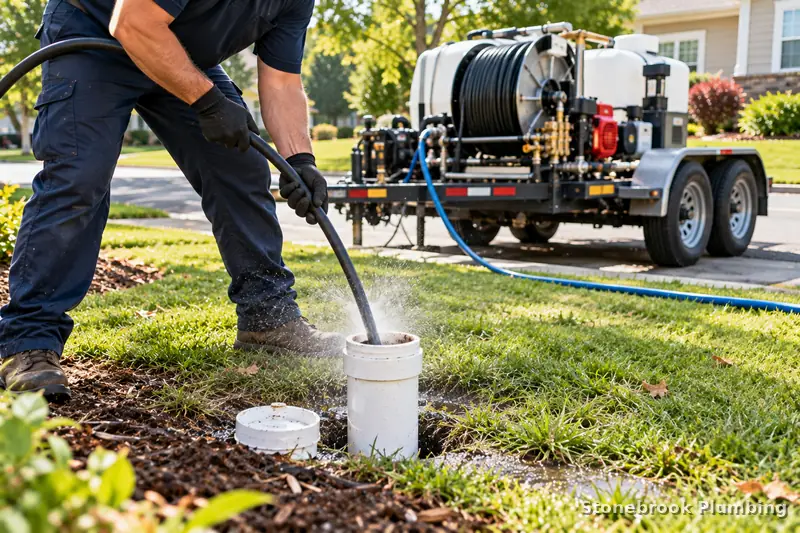
A hose with a specialized nozzle sends water through the line at high pressure, blasting buildup off the pipe walls and flushing it downstream.
A snake clears a channel through a blockage. Jetting scrubs the full inside surface, so grease and scale come off the wall instead of being left to catch the next clog.
When drains keep slowing down from buildup rather than a one-off clog, a full cleaning resets the line.
Kitchen lines and older pipe that collect grease and scale respond well to a thorough jetting.
After roots are cut back, jetting clears the debris; the entry point still needs a lasting repair.
A clean pipe wall is needed for trenchless lining to bond, so jetting often comes first.
On a fragile, cracked, or already-failing pipe, high pressure can make things worse. That is why a responsible contractor runs a camera inspection first. If the line is compromised, the honest answer is a repair, not a jetting.
A camera confirms the pipe is sound enough to jet and shows where the buildup is.
The nozzle is fed into the line through a cleanout or access point.
High-pressure water scours the walls and carries debris downstream and out.
A final camera pass confirms the line is clear and shows its true condition.
Make sure these are covered before the line is jetted.
Keep reading, or call and get a local pro on it.
Real numbers on what a failing sewer line costs in health, money, and disruption.
USDA Forest Service research finds tree roots alone cause more than half of all sewer blockages, and grease and scale add to the load. Hydro jetting clears the full pipe wall, not just a channel through the clog.
The Insurance Information Institute puts the average water damage and freezing claim near $12,514, and the U.S. EPA ties sewer overflows to thousands of gastrointestinal illnesses a year. Keeping the line clear helps you avoid both.
The USDA Forest Service research figures show clearing a line early costs a fraction of replacing a pipe that buildup and roots have ruined. Regular jetting on a problem line is cheap next to that.
For pipe in sound condition, yes. On old, cracked, or fragile lines it can do harm, which is why a camera inspection comes first to confirm the pipe can take the pressure.
It depends on the line. Homes with heavy grease use or ongoing root pressure may benefit yearly; others go much longer. A contractor can suggest an interval based on what the camera shows.
Yes. The high-pressure water cuts roots back thoroughly and clears the pipe wall. The crack or joint they entered through still needs repair, or they will grow back.
For grease, sludge, and full-diameter buildup, yes. A snake punches a hole through a clog; jetting scours the entire pipe wall clean. For a simple isolated clog, a snake may be all that is needed.
It can stress a pipe that is already failing. That is the whole reason a camera inspection is done first, so the method matches the pipe's real condition.
For a standard residential lateral, often one to two hours, depending on how much buildup is in the line and how easy it is to access.
It is strongly recommended. The inspection confirms the pipe is sound enough to jet and shows whether the problem is buildup or something jetting cannot fix, like a crack or collapse.
Many local contractors offer professional hydro jetting for grease, sludge, and roots. Call 855-816-3796 and we will connect you with an experienced sewer pro near you.
Tick what you are seeing and get an instant read on what it could be and who to call. This is a guide, not a diagnosis.
A local contractor can inspect the pipe, jet it clean if it is sound, and flag anything that needs a real repair. Call to get it handled.