The condition inside the pipe
Cracks, corrosion, scale, grease, root intrusion, sags, and collapse show up clearly on the monitor as the camera travels the line.

A sewer camera inspection sends a waterproof camera through your sewer line so a contractor can see the exact condition inside the pipe, on screen, in real time. It is the step that turns guesswork into a clear diagnosis before any repair or replacement.
Most sewer decisions go wrong when the pipe is never actually looked at. An inspection shows whether you have a simple clog, roots, a crack, a sag, or a collapse, and exactly where along the line it sits. That is what lets you say yes to the right fix instead of paying for the wrong one.
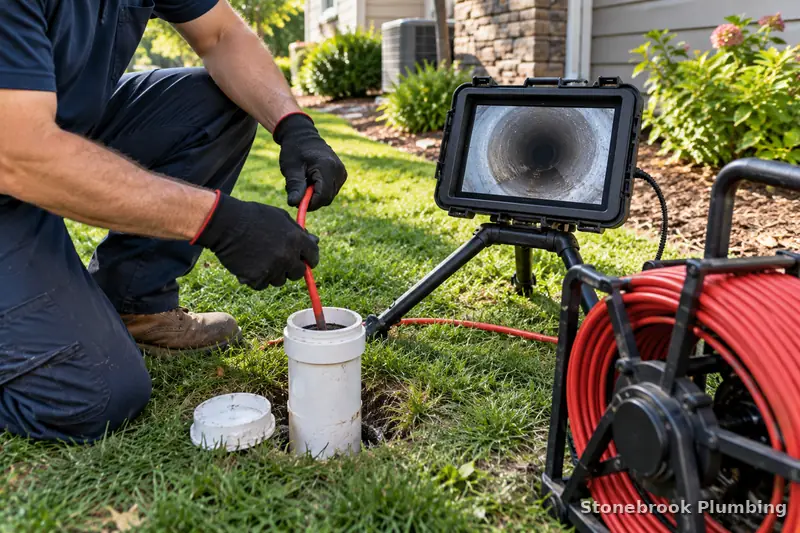
Cracks, corrosion, scale, grease, root intrusion, sags, and collapse show up clearly on the monitor as the camera travels the line.
A locator traces the camera head so the problem is marked in your yard by position and depth, not estimated.
Seeing whether the line is clay, cast iron, or a newer material helps set realistic expectations for repair options.
A few situations where an inspection pays for itself.
The camera enters through a cleanout or another access point on the lateral.
It travels the pipe while you and the contractor watch the condition on screen.
A locator pinpoints the depth and position of anything found in the yard.
The footage is explained, and you get a recording or summary to keep.
An inspection is a diagnosis, not a fix. A badly blocked pipe may need cleaning first before the camera can see the walls clearly.
The camera shows the condition. A local contractor reads it in context of pipe age, soil, and access to recommend the right next step.
A quick list to get the most out of an inspection.
Keep reading, or call and get a local pro on it.
Real numbers on what a failing sewer line costs in health, money, and disruption.
The U.S. EPA estimates 23,000 to 75,000 sewer overflows happen nationwide every year. A camera inspection finds the crack, sag, or root intrusion behind a slow drain before it becomes one of them.
The Insurance Information Institute reports the average water damage and freezing claim at about $12,514, with roughly 1 in 60 insured homes filing one a year. A short inspection is cheap insurance against that.
USDA Forest Service research finds that tree roots cause more than half of all sewer blockages. A camera shows exactly where they are getting in, so the fix targets the real problem instead of guessing.
It depends on the length of the line, access, and whether the pipe needs cleaning first to see clearly. There is no fixed number that fits every home. Call and a local contractor can give you a quote for your property.
You should. A reputable contractor provides the footage or a written summary with the findings. Ask for it up front so you have a record tied to any repair recommendation.
Yes. Paired with a locator, the inspection marks the depth and position of the problem in your yard, so any repair targets the right spot instead of guessing.
Sometimes. A heavily blocked or greased line may need clearing first so the camera has a clear view. A contractor will tell you if that step is needed.
For a standard residential lateral, often under an hour. A longer or harder-to-access line can take more time.
For an older home, it is one of the smartest checks you can make. A hidden sewer problem is expensive to inherit, and an inspection turns an unknown into a known before you close.
Standard laterals, yes. Very small lines or a severely blocked pipe may need cleaning or different equipment first, which the contractor will assess.
Many local contractors offer same-day camera inspections. Call 855-816-3796 and we will connect you with an experienced sewer pro near you who can inspect the line and show you the footage.
Tick what you are seeing and get an instant read on what it could be and who to call. This is a guide, not a diagnosis.
A local contractor can camera your sewer line, show you the footage, and explain your options. Call and get a clear answer instead of a guess.