No more septic surprises
A failing septic system is costly and messy. The Insurance Information Institute average water damage and backup claim near $12,514 shows what a failure can cost.

Septic to sewer conversion connects your home to the municipal sewer, abandons the old septic tank safely, and runs a new lateral out to the public main. It ends the pumping, the drain-field worries, and the risk of a failing septic system for good.
When city sewer reaches your street, converting is often the smarter long-term move. It takes planning and permits, but it removes a major maintenance headache from the property.
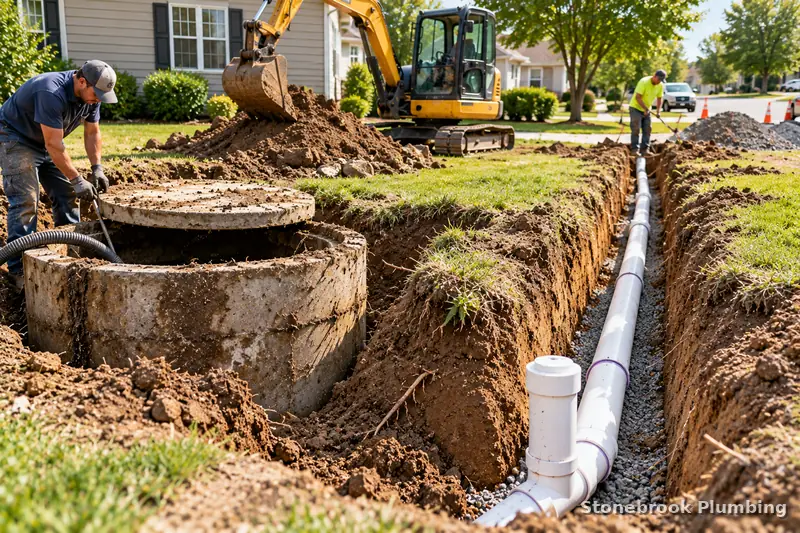
A pro maps the route, pulls the permits, and runs a new sewer lateral from the home to the public main with the correct slope.
The septic tank is pumped, then crushed or filled and abandoned to code, so it cannot collapse or hold water later.
Tick what you are seeing and get an instant read on what it could be and who to call. This is a guide, not a diagnosis.
Real numbers on what the problem costs in health, money, and disruption.
A failing septic system is costly and messy. The Insurance Information Institute average water damage and backup claim near $12,514 shows what a failure can cost.
The U.S. EPA ties sewage releases to thousands of illnesses a year, and a failing drain field is one source; a proper sewer connection removes it.
A permitted conversion with a properly sloped new lateral is a long-term fix, the kind of early, done-right work the USDA Forest Service research notes saves money later.
Keep reading, or call and get a local pro on it.
It depends on the distance to the main, depth, and permits. Call 855-816-3796 and a local pro can assess the site and quote it.
Many municipalities require connection once sewer is available at the street. A local pro can confirm the rules in your area.
It is pumped and then crushed or filled and abandoned to code, so it cannot collapse or collect water.
A straightforward connection is often a few days, longer with a long run, deep pipe, or permit steps.
Yes. Conversions involve permits, inspections, and utility coordination, which a reputable contractor handles.
Call 855-816-3796 and we will connect you with an experienced local pro for septic to sewer conversion.
Converting ends the septic upkeep for good. Call and we will connect you with a local pro to plan the connection.